Leipzig is a diverse and vibrant city with plenty to inspire you. Discover the highlights of the city of Leipzig and learn more about its history, culture and sights – whether as a supporting programme for your conference or as a leisure activity after a successful day spent networking.
Leipzig boasts a unique musical tradition. Many famous composers such as Bach, Mendelssohn, Grieg and Schumann have left their mark here. Places where they once lived and worked are now part of the Leipzig Music Trail. The fascinating power of music can be felt everywhere – in Leipzig’s Gewandhaus, at Leipzig Opera and in St Thomas’ Church. Visitors to Leipzig also appreciate the extraordinary wealth of playable organs by famous master builders. Give your clients the chance to experience the city from a musical perspective.

Guided tours of the Bach Museum and concerts in the Baroque Summer Hall are an unforgettable experience for music lovers. The two offers can be combined.
A demonstration and performance on the harpsichord is available on request. The special concert lasts 30 minutes and can be booked for groups of up to 60 people.
Combine your visit to the Bach Museum with a tour of the many courtyards and passages in the immediate vicinity.

The Gewandhaus tour in Leipzig offers fascinating insights into the history and architecture of the famous concert hall. Guests learn about the Gewandhaus Orchestra, experience the impressive acoustics and discover the famous Schuke organ and Sighard Gille’s ceiling fresco in the foyer.
Combine your visit to the Gewandhaus with a walk through the city.

Musical Leipzig has many facets. Discover them on this inspiring tour.
Follow in the footsteps of Johann Sebastian Bach, who took up the post of Thomaskantor – musical director of the now world-famous St Thomas Boys’ Choir – in 1723. Then there is Georg Philipp Telemann, who celebrated his first major compositional successes in Leipzig. Robert Schumann and Clara Wieck spent the early years of their marriage in Leipzig, and Felix Mendelssohn Bartholdy worked as music director of the Gewandhaus.

The Mendelssohn House in Leipzig offers an insight into the lives of Felix Mendelssohn Bartholdy and his sister Fanny Hensel over three floors. It features historical rooms, including the faithfully reconstructed apartment where the composer lived. One highlight is the Effektorium, an interactive installation that allows visitors to conduct a virtual orchestra.
Every Sunday at 11am there is a concert in the former music parlour, once frequented by the likes of Clara Schumann. Combine this with a themed tour of the city.
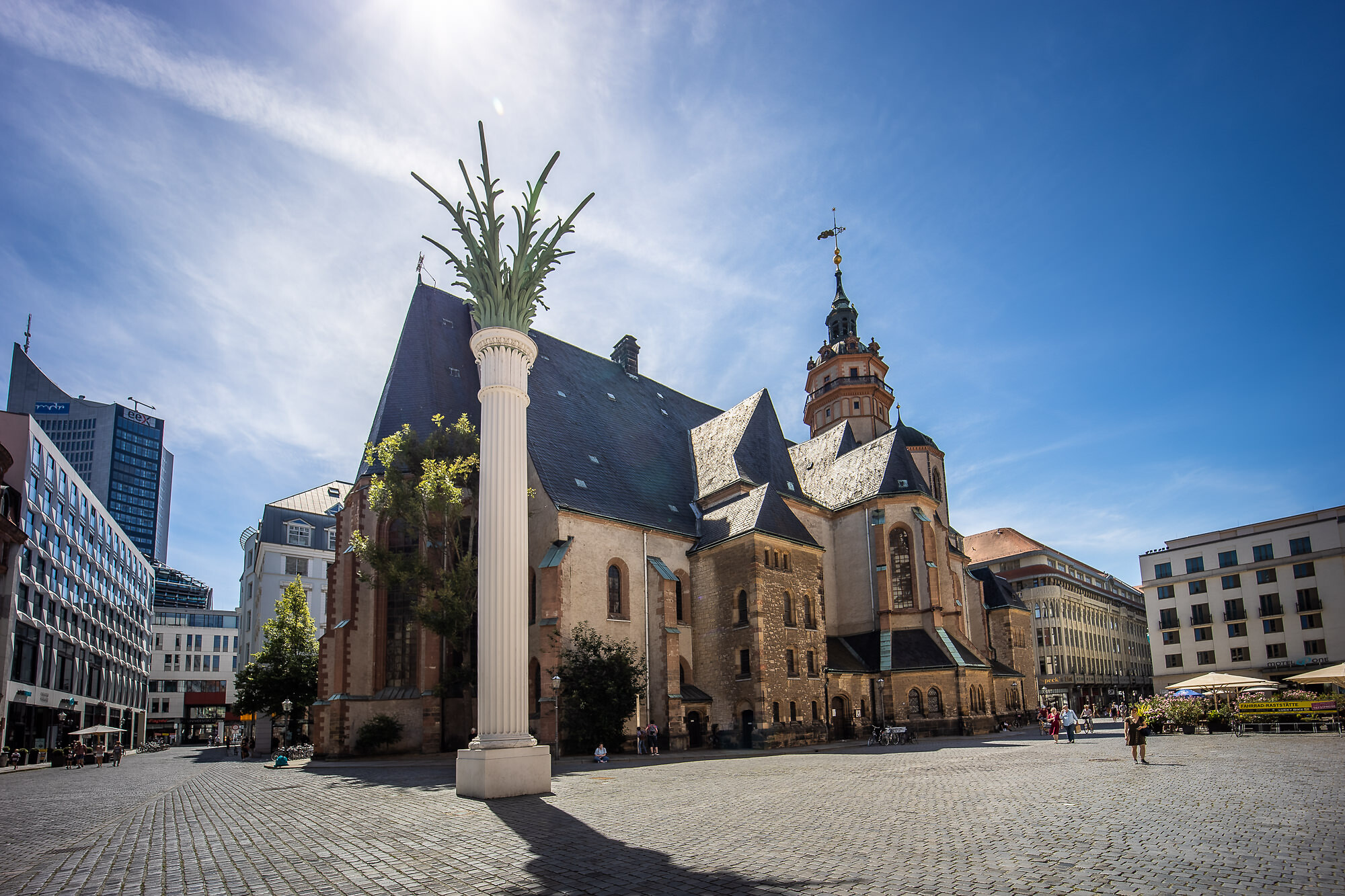
Every Friday at 4.30pm, the queen of musical instruments invites visitors to an audience in St Nicholas’ Church. A guided tour of the great Ladegast Eule organ lasts half an hour. Private tours are available by prior arrangement.
A half-hour prayer service is held on Wednesdays at 5pm. Alongside three organ works, there is a short interpretation of a Bible text or a chorale by Leipzig pastors and theologians.
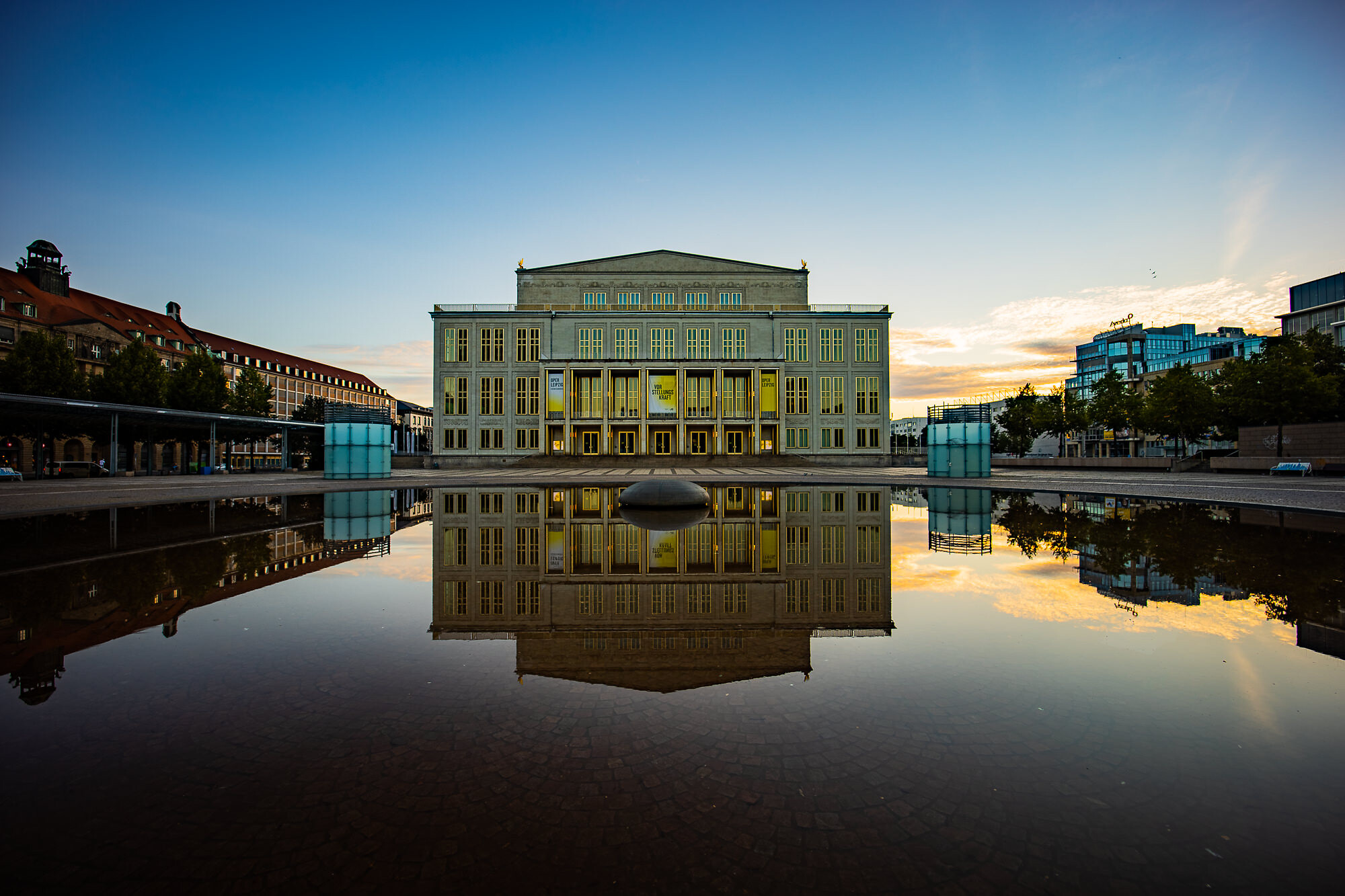
Guided tours of Leipzig Opera provide a comprehensive insight into the architecture, interior design and history of the building, which opened in 1960 as the only new opera house built in the GDR. Experience the excellent acoustics and the striking dandelion aesthetic, and visit the costume collection. Highlights include a behind-the-scenes tour and an opportunity to step onto the grand opera stage. Tours last 70 to 90 minutes and can be booked for up to 25 people.
Combine your visit with a tour of Leipzig’s musical history.

On a lively tour of the home of the Schumanns, you will learn more about the two artists and the people they were, as well as how their former residence is used today.
How about a fascinating group tour followed by a private concert in the historic Schumann Hall? Or book “Flitterjahre” – a musical journey through time with piano and vocals.
Be sure not to miss the sound room in Leipzig’s Schumann-Haus. It is an interactive sound installation by the artist Erwin Stache.

Johann Sebastian Bach worked at the Thomaskirche, or St Thomas’ Church, for 27 years. From 1723 to 1750 he was Thomaskantor – the musical director of the boys’ choir – in Leipzig. The St Thomas Boys’ Choir is still famous throughout the world. The composer’s remains have been in St Thomas’ Church since 1950.
The motet takes place on Fridays at 6pm and Saturdays at 3pm. Performances of cantatas by Johann Sebastian Bach last approximately 75 minutes. Doors open 45 minutes before the performance. Tickets can only be purchased at the door.
A guided tour up the tower of St Thomas’ Church is an ideal addition to any supporting programme in Leipzig. The organ can be played on request.
Leipzig’s culinary scene is outstanding, with over 1,500 bars and restaurants. These include world-famous restaurants such as Auerbachs Keller, as well as bars and pubs in a number of trendy neighbourhoods. Treat yourself and your clients to an exclusive dining experience.

The historic Fasskeller, or Barrel Cellar, where wine was first served in 1525, is the centrepiece of Auerbachs Keller. At this extraordinary place, history comes alive when the cellar master or even the devil himself invites you to the Fasskeller ceremony, a well-known and popular spectacle.
Walk in the footsteps of Goethe, Faust and Luther through the historic cellar vaults. Another exciting show is Mephisto’s Elixir, in which the devil himself presents everyone with a diabolical gift. Don’t miss out on this unique opportunity for diabolical absolution.

Bayerischer Bahnhof in Leipzig is the oldest preserved railway terminus in the world and offers a unique atmosphere as a pub, brewery and restaurant. Brew your own company beer or watch the master brewer and brewery inspector at work. There are also exciting beer seminars and informative brewery tours, where you can learn about the art of brewing and the distinctive features of Leipzig’s speciality beer, gose.

Discover the diversity of beer and whisky in dedicated seminars. The beer seminar will teach you the differences between pilsner, export, top-fermented and bottom-fermented beer and you will also visit the brewery. Learn the theory behind topics such as beer sensory analysis, the brewing process and the history of beer.
The whisky seminar immerses you in the world of whisky. Learn all about the production, types and history of whisky, and taste six whiskies from different regions, discovering the aromas and flavours of each variety.
The decisive day of the Peaceful Revolution was 9 October 1989. That day in Leipzig, some 70,000 demonstrators brought down the SED regime. They shouted: “We are the people!” and “No violence!”. With their courage, determination and renunciation of violence, the people wrote national history in Leipzig and laid the foundations for German reunification.
The moving images of the Monday demonstrations in the autumn of 1989 were seen around the world. They showed determined people demanding basic democratic rights and standing up for a free society.
Under the motto “Autumn '89 – The Dawn of Democracy”, the city commemorates the events surrounding the Peaceful Revolution with the annual Festival of Lights on Leipzig’s day of remembrance.

In the autumn of 1989, decisive historical events took place in Leipzig that went down in history as the Peaceful Revolution. The walking tour presents the most important sites of this moving time: St Nicholas’ Church, where prayers for peace took place; the Monday demonstrations on Augustusplatz and the ring road; the “Runde Ecke”, which is the former district headquarters of the state security and today a memorial site; and a number of other stops.
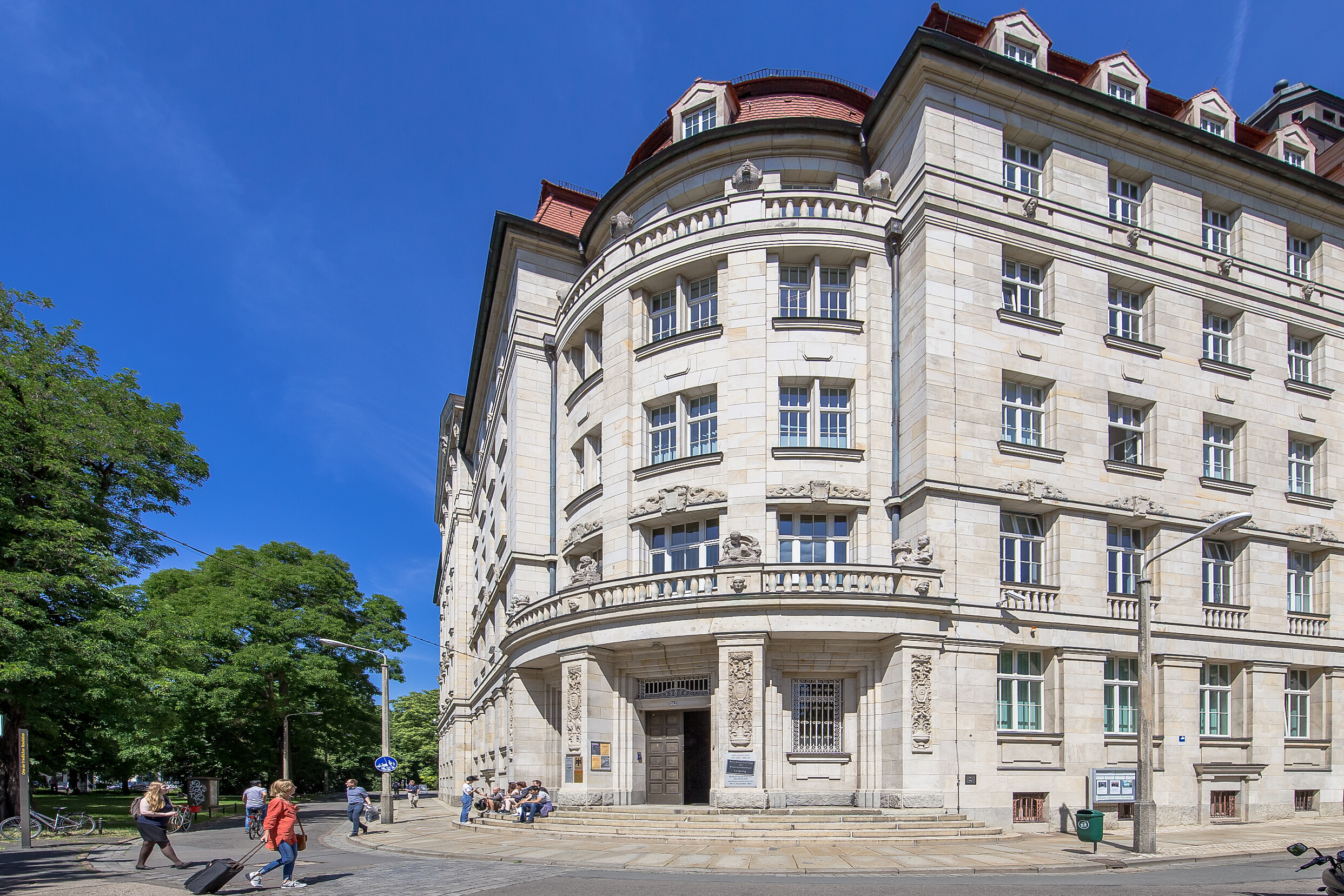
The “Runde Ecke” museum in Leipzig provides information on the history and workings of the Stasi. The exhibition “Stasi – Power and Banality” is shown in the original rooms of the former state security district headquarters.
There are also guided tours of the former Stasi headquarters and the museum in the Stasi bunker near Machern. The museum is dedicated to the reappraisal of the GDR’s past and the promotion of freedom and democracy.

St Nicholas’ Church is the symbol of German reunification. To this day, prayers for peace are held every Monday at 5pm, prepared and organised by various groups, initiatives, associations and institutions.
A replica of a Dauthe column stands next to the church in the Nikolaikirchhof, serving as a peace column to commemorate the Monday demonstrations and the peaceful nature of the revolution.

Leipzig’s most famous landmark, the Monument to the Battle of the Nations, stands on the historic site of the 1813 battle. Inaugurated in 1913, this imposing monument of concrete and granite porphyry rises 91 metres into the air. The viewing platform offers impressive views of Leipzig and the surrounding area. With a fascinating design by Bruno Schmitz, the memorial features a crypt decorated with knights, colossal statues standing almost ten metres and a dome 68 metres high.
The acoustics of the domed hall make concerts an unforgettable experience, and the FORUM 1813 museum offers a fascinating insight into the history of the Battle of the Nations.

The Leipzig Forum of Contemporary History presents German history after 1945 – with a special focus on the dictatorship in the GDR, the Peaceful Revolution of 1989 and reunification. It offers a permanent exhibition as well as changing special exhibitions on political, social and cultural developments in Germany. These are told through numerous video and audio stations and interactive media. The museum is a place of reflection and discussion, regularly organising events on contemporary historical topics.
For groups of 15 people or more, it is best to book a group tour tailored to your needs in advance with the visitor service.
Traces of industrialisation can still be seen in Leipzig today, especially in the trendy Plagwitz district. It is home to a 90-hectare monument to industrial architecture, planned as the first large-scale industrial estate in Germany. The Wilhelminian-era buildings have been restored to their former glory, with beautiful brick façades. Exclusive arts and cultural centres have moved into the former factory buildings, giving the area a new, creative character.

The Leipzig New Lakeland region owes its development to decades of lignite mining, refining and use.
Covering some 5.4 hectares of typical open-cast mining terrain, the park presents the complete production cycle of an open-cast mine in an authentic and understandable way. The process ranges from the removal of the cultivated landscape, the preparation of the surface and lowering of the groundwater, the removal of overburden and the actual extraction of the coal, to the reconstruction of the site and the restoration of entire landscapes.
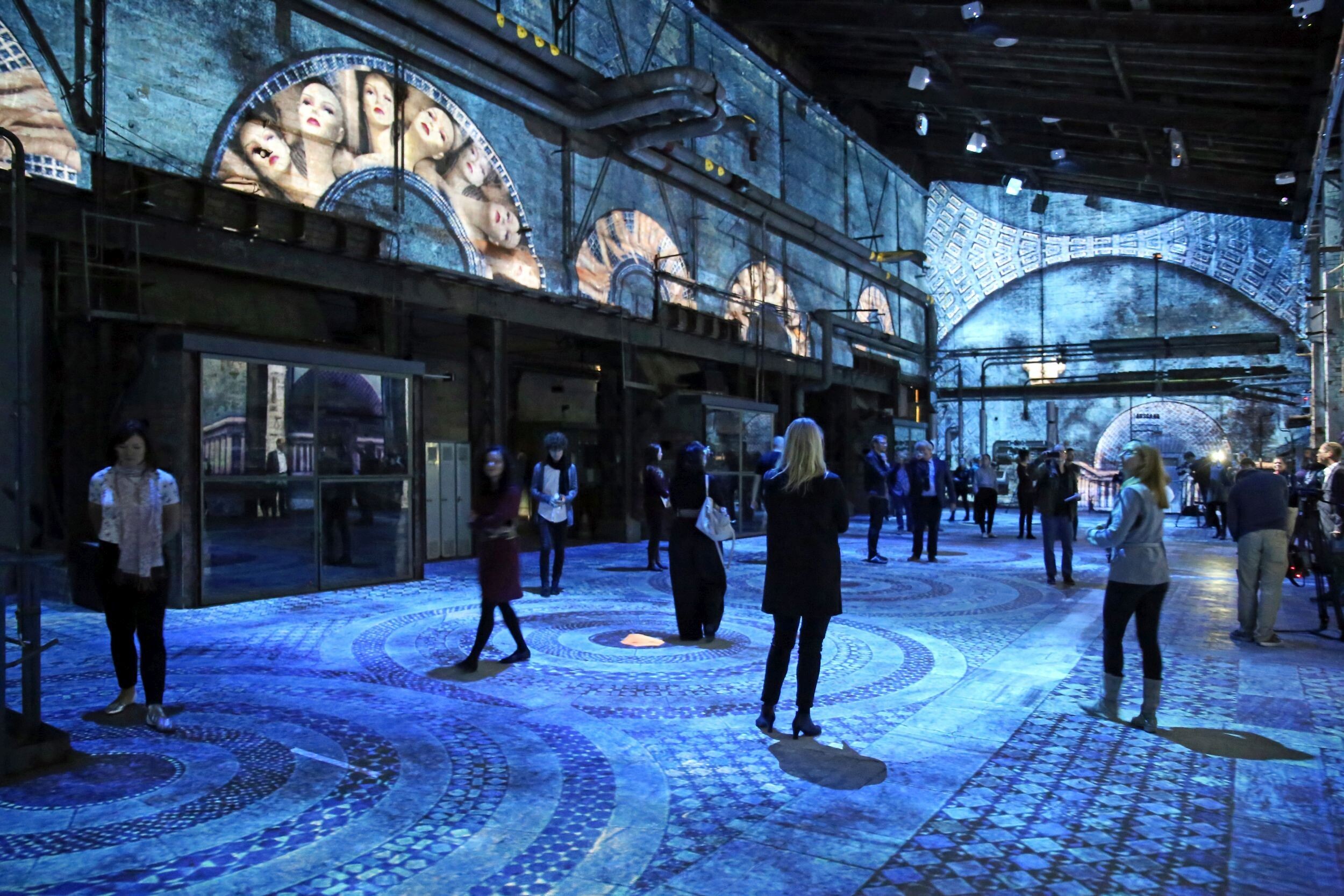
Today, visitors can still feel the history as they walk through the listed halls and cellars. The boiler foundations remain, as do the coal bunkers, dust filters, steam distributors, conveyor belts, control centre and much more – not post-industrial charm, but authentic memories.
The former cogeneration plant is now Germany’s first museum dedicated exclusively to digital and multimedia art.

What was once the largest cotton mill in continental Europe is now one of Germany’s most interesting production and exhibition sites for contemporary art and culture.
Group tours of the Spinnerei are offered from Tuesday to Saturday. Private group tours are available on request.
Tours take approximately 2 hours. Your tour of the site will give you a comprehensive insight into the history of the cotton mill and how it became the cultural centre it is today. The tour also includes the archive, four to six of the site’s 14 galleries, exhibition rooms and two workshops (not artists’ studios).

At the Panometer – a portmanteau of ‘panorama’ and ‘gasometer’ – you can immerse yourself in the world’s largest 360° panoramas and feel part of the spectacular atmosphere.
The former Gasometer II, built in 1910, has been home to artist Yadegar Asisi’s 360° panoramas since 2003.
Groups of up to 20 people can book individual guided tours of the accompanying exhibition and the panorama itself.

Around 20 artists and other creative design and craft businesses now work in the former wallpaper factory.
Most of the studios, art spaces, workshops, the ZWISCHENFISCH café and the ROCKY MARIA factory canteen are open for the Tapetenwerk festivals with guided tours in the spring and autumn.
Private tours for groups of up to 20 people are available on request.